1.0 Background to the Study
Social cohesion is increasingly recognised as an important condition for peaceful coexistence, effective governance and national development. It goes beyond people living together without conflict and includes whether citizens feel connected to one another, cooperate across social differences, trust others and institutions, and believe that society treats people fairly. Recent scholarship distinguishes between horizontal relationships among citizens and vertical relationships between citizens and institutions. This distinction is important because a society may maintain strong interpersonal relationships while experiencing weak confidence in formal institutions (Burchi et al., 2026).
This is especially significant for Nigeria, which is grappling with factors like ethnic, religious, regional and socioeconomic disparities alongside issues that include insecurity, poverty, corruption, political tension, and unequal access to opportunities and justice. Insecurity, farmer-herder conflict, banditry, corruption, poverty, marginalisation, and ethnic and religious divisions are some of the major problems that impact social cohesion in Nigeria, according to the Africa Polling Institute (API) 2026 Nigeria Social Cohesion Survey.
In recent times, however, there are indications that Nigerians' sense of belonging is improving, despite the aforementioned challenges. In 2026, the Social Cohesion Index rose to 48.8% and 52% of respondents described themselves as "primarily Nigerian". Equally, there is a positive development, in that public institutions are not very reliable, but that is weakness. The institutional trust scores performed poorly, with only 3% saying they had a high level of trust in the institution, but significant numbers saying they trusted little or not at all in the Federal Government, National Assembly, judiciary and police (API, 2026). However, there seemed to be more trust in religious and traditional leaders and persons from other ethnic and religious groups among the Nigerians.
This contrast illustrates an important aspect of Nigeria society: where the confidence in formal institutions is low, the social bond and community sense is strong. For instance, 48% reported that relatives and communal groups were their main source of support while a mere 17% reported that institutional assistance, such as API, was their primary source of support (API, 2026). Community networks can thus remain critically important to the maintenance of social networks and of support, when formal institutions are seen to be less reliable.
Prior studies also indicate that there are close links between trust, fairness and social cohesion. According to Organisation for Economic Co-operation and Development [OECD], 2024, 2025) confidence in public institutions and perceptions of institutional integrity are associated with trust and cohesion in society Akinlabi (2022) found that perceptions of procedural justice, police effectiveness and police treatment affect institutional legitimacy and citizen giving way to police in Nigeria. Likewise, Adeleke (2023) and Adetunji et al. (2023) note the importance of social cohesion for enhancing community collaboration and collective action.
The issue, therefore, is not simply whether Nigerians trust one another or government institutions. The more important question is how different forms of trust interact with perceived social justice to shape social cohesion. Thus, this study examines this relationship, with particular attention to the apparent gap between citizen-to-citizen trust and trust in formal institutions in contemporary Nigeria.
Statement of the Research Problem
Nigeria presents an important paradox in social cohesion. Nigerians continue to maintain social relationships across ethnic, religious and community boundaries. The 2026 API survey found that 52% identified primarily as Nigerian, while 47% expressed some to a lot of trust in people from other ethnic groups and another 47% reported similar trust in people from other religious groups. Nigerians also showed greater confidence in religious and traditional leaders than in several formal state institutions (API, 2026).
Yet, this social connectedness exists alongside very low institutional trust. More than 70% of respondents reported little or no trust in institutions such as the National Assembly, police, judiciary and Federal Government. Concerns about justice and accountability further deepen the problem: 75% rated social justice as low, 64% rated impunity as average or high, and 59% considered corruption high. Only 16% believed that access to justice was free from corruption (API, 2026).
The central problem, therefore, is the apparent coexistence of stronger relationships among citizens and weak confidence in the institutions meant to protect justice, security and equality. This raises an important question: can social cohesion remain sustainable when citizens trust one another more than the institutions that govern them?
Existing Nigerian studies have examined aspects of this problem, but largely within specific institutions or communities. For instance, Akinlabi (2022) focuses on procedural justice and police–citizen trust, while Adeleke (2023) examines social cohesion and community crime control. Less attention has been given to how institutional trust, perceived social justice and interpersonal trust jointly shape social cohesion at the national level.
This study therefore addresses the citizen–state trust gap by examining how horizontal trust among citizens and vertical trust in institutions interact with perceived social justice to influence social cohesion in contemporary Nigeria.
Aim and Objectives of the Study
The study aims to examine the relationships between institutional trust, horizontal trust, perceived social justice, perceived impunity and social cohesion among Nigerians, with particular attention to the mediating role of perceived social justice and variations across selected demographic and geopolitical groups.
Specifically, the study seeks to:
- examine the relationship between institutional trust and social cohesion among Nigerians;
- examine the relationship between horizontal trust and social cohesion among Nigerians;
- assess the relationship between perceived social justice and social cohesion among Nigerians;
- examine the relationship between perceived impunity and social cohesion among Nigerians;
- determine whether perceived social justice mediates the relationship between institutional trust and social cohesion among Nigerians; and
- examine whether the relationship between institutional trust and social cohesion varies across selected demographic and geopolitical groups in Nigeria.
Research Questions
The following research questions were raise to guide the study:
- What relationship exists between institutional trust and social cohesion among Nigerians?
- What relationship exists between horizontal trust and social cohesion among Nigerians?
- What relationship exists between perceived social justice and social cohesion among Nigerians?
- What relationship exists between perceived impunity and social cohesion among Nigerians?
- To what extent does perceive social justice mediate the relationship between institutional trust and social cohesion among Nigerians?
- Does the relationship between institutional trust and social cohesion vary across selected demographic and geopolitical groups in Nigeria?
Research Hypotheses
The following null hypotheses were raised to guide the study:
- H01: There is no significant relationship between institutional trust and social cohesion among Nigerians.
- H02: There is no significant relationship between horizontal trust and social cohesion among Nigerians.
- H03: There is no significant relationship between perceived social justice and social cohesion among Nigerians.
- H04: There is no significant relationship between perceived impunity and social cohesion among Nigerians.
- H05: Perceived social justice does not significantly mediate the relationship between institutional trust and social cohesion among Nigerians.
- H06: The relationship between institutional trust and social cohesion does not vary significantly across selected demographic and geopolitical groups in Nigeria.
2.0 Conceptual Framework
The conceptual framework is based on the view that social cohesion in Nigeria is shaped by both horizontal relationships among citizens and vertical relationships between citizens and state institutions. Accordingly, the study distinguishes between horizontal trust and institutional trust and examines their relationships with social cohesion (Burchi et al., 2026).
Institutional trust is conceptualised as citizens’ confidence in public institutions to act fairly, effectively and in the public interest. Higher institutional trust is expected to strengthen cooperation, civic participation and, consequently, social cohesion.
Horizontal trust captures citizens’ willingness to trust and cooperate with people from different ethnic and religious backgrounds. Its inclusion recognises that interpersonal and community relationships may remain strong even where confidence in government institutions is limited. Examining both forms of trust therefore provides a more comprehensive understanding of the foundations of social cohesion in Nigeria.
Perceived social justice is proposed as a mediating mechanism linking institutional trust to social cohesion. When citizens perceive institutions as fair, impartial and accessible, they may be more willing to trust institutions and participate in collective life. Conversely, perceptions of unequal treatment and limited access to justice may weaken these relationships (Nweke & Olajonrin, 2026).
The framework also incorporates perceived impunity as an independent explanatory variable. Where citizens believe that misconduct, rights violations or abuses of power go unpunished, confidence in institutions may decline and social cohesion may be weakened. Furthermore, the demographic and contextual variables of age, gender, education, income, religion, ethnicity, urbanisation and geopolitical zone are also captured as control or grouping variables to control for potential variations between population groups and geographical context.
Overall, the framework suggests that at the macro level, institutional trust and horizontal trust are linked to social cohesion, with perceived social justice potentially being a mediating factor between institutional trust and social cohesion, and perceived impunity potentially being an independent factor.
The framework is presented below.
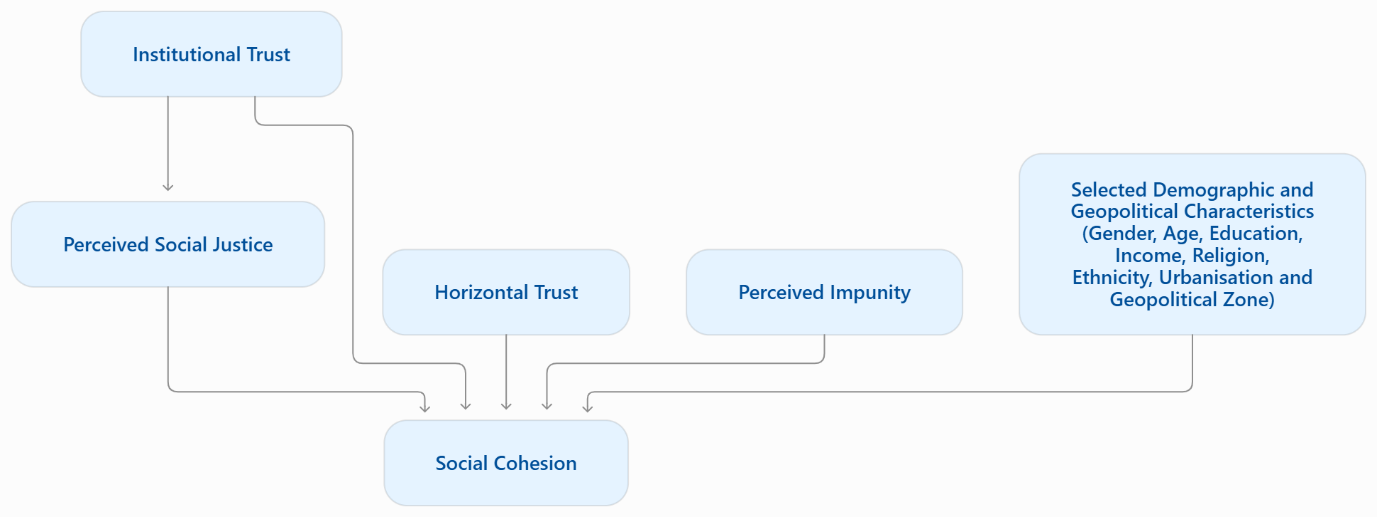
Source: Author’s conceptualisation based on the study objectives, relevant literature and the 2026 Nigeria Social Cohesion Survey framework.
Explanation of the Conceptual Framework
The framework proposes that institutional trust and horizontal trust are associated with social cohesion. Institutional trust reflects citizens’ confidence in public institutions, while horizontal trust captures trust and willingness to cooperate across ethnic and religious groups (Burchi et al., 2026).
Perceived social justice is proposed as a potential mediator between institutional trust and social cohesion. The framework therefore specifies both a direct pathway from institutional trust to social cohesion and an indirect pathway through perceived social justice:
Institutional Trust → Perceived Social Justice → Social Cohesion.
Perceived impunity is included as an independent explanatory variable, reflecting the extent to which citizens perceive that misconduct or abuses of power go unpunished. Selected demographic and geopolitical characteristics are included as control or grouping variables.
Because the study is based on cross-sectional data, these relationships are interpreted as statistical associations rather than causal effects.
2.1 Theoretical Framework
Social Capital Theory
The study is anchored on the Social Capital Theory that focuses on the importance of trust, social networks and norms for cooperation and collective action. Social capital is the term used to describe the social connections and social resources that are shared when people work together for the benefit of all (Coleman, 1988; Putnam,, 2000).
The theory has relevance to this study because the ability of citizens to trust each other, to have social connections, and to work towards common causes is a part of social cohesion. Family, community, traditional and religious networks can be significant sources of support and cooperation, especially in the absence of trust in formal institutions in Nigeria.
One important difference in this study is the difference in horizontal and vertical trust. Horizontal trust relates to citizen-to-citizen trust, including trust between people of different ethnic and religious groups, and vertical trust relates to citizen-confidence in formal institutions (OECD, 2024; Burchi et al., 2026). This is a distinction that can help to account for the fact that trust in institutions is often low while interpersonal trust is high.
Trust and social networks collectively can promote cooperation and collective action from a social capital perspective. But the presence of "social capital" in the community does not necessarily lead to trust in government institutions. The theory can thus offer a helpful perspective on the disconnect between citizen to citizen and citizen to state trust in modern Nigeria.
Application of Social Capital Theory to the Study
The study is guided by the Social Capital Theory in the following four ways. It does so first because it serves as a starting point for considering horizontal trust as a determinant of social cohesion. Second, it provides an opportunity for the institutional trust to be included, since the institutions influence citizens' opportunities for cooperation and collective participation. Third, it serves as a foundation for thinking about perceived social justice, as a sense of fairness and inclusion can impact trust and cooperation. Finally, perceived impunity is taken into account, as if the perception of a lack of punishment continues over time, it can lead to mistrust in institutions and to a reduction in the conditions for a wider social cooperation (Fukuyama, 1999).
In summary, the overall framework of considering the relationship between horizontal trust, institutional trust, perceived social justice and perceived impunity with social cohesion in the current Nigeria is provided by the Social Capital Theory.
The theoretical logic can be summarised as:
Social Cohesion is more closely linked to Cooperation and Collective Action which is further linked to Trust and Social Relations with institutional conditions potentially strengthening or weakening these relationships.
3.0 Methodology
Research Design
The study employed a quantitative cross-sectional design based on secondary analysis of data from the 2026 Nigeria Social Cohesion Survey conducted by the Africa Polling Institute (API). This design was considered appropriate because the study examined the relationships among institutional trust, horizontal trust, perceived social justice, perceived impunity and social cohesion using individual-level survey responses.
The API survey involved 5,315 face-to-face household interviews conducted across Nigeria. A stratified sampling approach and geographic quotas were used to achieve coverage across states and senatorial districts. Interviews were conducted in English, Pidgin, Hausa, Igbo and Yoruba. The dataset also included the API survey weight (F_Weight), which was retained for the analysis (API, 2026).
Population and Sample
Rather than drawing a new sample, the study analysed the complete respondent-level dataset made available by API. The original dataset contained 5,315 respondents. The number of observations differed across some analyses because of missing responses on particular variables. The original API survey weight was retained, and no additional weighting procedure was introduced.
Source of Data
The study relied primarily on the 2026 Nigeria Social Cohesion Survey raw dataset obtained from the Africa Polling Institute. The accompanying API report was used to understand the survey design, indicators and measurement procedures. The survey covers several dimensions relevant to social cohesion, including national identity, trust, social justice and equity, civic participation, tolerance, impunity, corruption, polarisation, security and peacebuilding, coping strategies, migration, and perceptions of self-worth and future prospects (API, 2026).
Relevant academic and institutional literature was also reviewed to guide the conceptualisation and interpretation of the study variables. For example, the literature on institutional trust highlights the importance of perceived fairness, integrity and institutional performance in shaping public confidence in institutions (OECD, 2024).
Measurement and Operationalisation of Variables
The study operationalised social cohesion as the outcome variable and institutional trust, horizontal trust, perceived social justice and perceived impunity as the principal explanatory variables. The measures were derived from relevant items in the 2026 Nigeria Social Cohesion Survey conducted by the Africa Polling Institute (API). The operationalisation reflects the multidimensional nature of social cohesion and recognises the distinction between relationships among citizens and relationships between citizens and institutions.
Social cohesion. Social cohesion was operationalised using five survey indicators: two identity-related items (Identity1 and Identity2) and three polarisation-related items (Polarization1–Polarization3). The polarisation items were reverse-coded so that higher scores consistently represented more favourable social-cohesion orientations. A composite score was calculated where respondents had valid responses to at least four of the five indicators. The resulting measure captures selected dimensions of shared identity and social distance; it should not be interpreted as an exhaustive measure of every dimension of social cohesion.
Institutional and public-leadership trust. Institutional trust was measured using Trust1–Trust12. These items cover respondents’ reported levels of trust in the Federal Government, National Assembly, State Assembly, judiciary, religious leaders, state government, local government, traditional leaders, media, police, military and the Economic and Financial Crimes Commission (EFCC). The measure therefore captures a broad dimension of trust in public institutions and influential public or community leadership actors. It is not restricted to formal state institutions. For conceptual precision, the construct is referred to in this study as institutional and public-leadership trust, although the shorter expression institutional trust is retained in tables and subsequent discussion where the meaning is clear. Higher scores indicate greater trust.
Horizontal trust. Horizontal trust was measured using Trust13 and Trust14, which assess respondents’ trust in people from other ethnic groups and people from other religious faiths. The two items capture a limited but important aspect of trust across salient social boundaries in Nigeria. They are used as indicators of intergroup interpersonal trust and should not be treated as a comprehensive measure of all forms of bridging social capital. Higher scores indicate greater reported trust.
Perceived social justice. Perceived social justice was measured using Soc_Justice1 and Soc_Justice2. The items assess whether Nigerian laws protect people equally and whether access to civil justice is available to all citizens or is disproportionately accessible to wealthy and powerful groups. The items were coded so that higher values represented more favourable perceptions of equality and access to justice. The composite therefore reflects respondents’ perceptions of fairness and equal access within the justice system.
Perceived impunity. Perceived impunity was represented by the API-derived Impunity_Index. The index was used as supplied in the survey dataset rather than constructing a new scale from the three individual impunity items. This decision was taken because the individual items did not demonstrate sufficiently strong internal consistency to justify treating them as a single newly constructed scale. Higher values on the supplied index represent higher perceived impunity, consistent with the direction used in the analysis.
Demographic and contextual variables. Demographic and contextual characteristics were included as control variables in the regression models and as moderators in the interaction analyses where specified. These included gender, age group, educational attainment, income category, religion, ethnic group, urbanisation and geopolitical zone. The categories were retained in accordance with the survey dataset.
The direction of all composite measures was checked to ensure that higher values had a consistent substantive interpretation. Reliability was assessed using Cronbach’s alpha for multi-item measures. The use of survey weights was specified for weighted descriptive and association estimates where appropriate. The absence of verified primary sampling unit and stratum identifiers in the analysis file means that the estimates should not be presented as fully design-adjusted complex-survey estimates.
Data Processing and Analysis
The data were analysed using SPSS. Initial screening involved checking for missing values, invalid responses, coding errors and inconsistencies. Where necessary, negatively worded items were reverse-coded so that higher values consistently represented higher levels of the relevant construct.
The reliability of multi-item measures was assessed using Cronbach’s alpha, together with item-level checks. Exploratory factor analysis was considered where appropriate to examine whether the selected items reflected the intended constructs.
The analysis began with descriptive statistics, including frequencies, percentages, means and standard deviations, to describe the sample and major study variables. Pearson’s correlation coefficients were then used to examine bivariate relationships where the relevant assumptions were reasonably satisfied.
To assess whether horizontal trust was significantly higher than institutional trust, a within-respondent comparison of the two composite indices was undertaken, as both measures were obtained from the same respondents. Accordingly, the analysis was treated as a paired comparison rather than a comparison of independent group means. A respondent-level difference score was calculated by subtracting institutional trust from horizontal trust. The weighted mean difference was estimated using the survey weight (F_Weight), with the corresponding standard error, 95% confidence interval and significance level reported. The analysis was restricted to respondents with valid scores on both indices. In addition to assessing whether the mean difference was statistically distinguishable from zero, its magnitude was considered to determine the substantive importance of the observed difference.
Multiple regression analysis was subsequently used to examine the independent associations of institutional trust, horizontal trust, perceived social justice and perceived impunity with social cohesion while accounting for selected demographic characteristics. The API survey weight (F_Weight) was retained in the analysis.
A mediation analysis was conducted to examine whether perceived social justice statistically mediated the relationship between institutional trust and social cohesion. Bootstrapping was used to estimate the indirect effect and its confidence interval, following regression-based mediation procedures (Hayes, 2018). Given the cross-sectional nature of the data, the mediation results were interpreted as statistical associations and not evidence of causal mediation.
The study also examined whether the relationship between institutional trust and social cohesion varied across selected demographic and geopolitical groups. Interaction terms were used to assess possible moderation by gender, age, education, income, religion, ethnicity, urbanisation and geopolitical zone. Statistical significance was assessed at α = .05, while effect sizes and confidence intervals were considered alongside p-values.
Additional Data Processing and Measurement Procedures
The internal consistency of the institutional trust, horizontal trust, perceived social justice and social cohesion measures was assessed using Cronbach’s alpha. The institutional trust measure (12 items) produced an alpha coefficient of .940, while the two-item horizontal trust measure produced an alpha of .864. Perceived social justice produced an alpha of .790, while the five-item social cohesion measure produced an alpha of .786. The reliability estimate for social cohesion was based on complete responses to all five items, whereas the composite score allowed respondents with at least four valid items. The API-derived Impunity_Index was retained as an observed index rather than treated as a newly constructed multi-item scale.
Missing observations were handled according to the scoring requirements of each measure. Consequently, the valid sample size varied across analyses. The API survey weight (F_Weight) was retained when calculating weighted descriptive statistics and conducting the weighted analyses. The availability of this weight did not, by itself, establish that all complex survey design features, such as primary sampling units and strata, were incorporated into variance estimation.
Model Specification
The principal regression model was specified as:
SC = β₀ + β₁IT + β₂SJ + β₃PI + β₄HT + β₅X + ε
where SC represents social cohesion; IT, institutional trust; SJ, perceived social justice; PI, perceived impunity; HT, horizontal trust; and X, the selected demographic and socioeconomic control variables.
The mediation model was specified as:
Institutional Trust → Perceived Social Justice → Social Cohesion
For the moderation analysis, the model was expressed as:
SC = β₀ + β₁IT + β₂G + β₃(IT × G) + ε
where G represents the relevant demographic or geopolitical grouping variable. A statistically significant interaction term was interpreted as evidence that the association between institutional trust and social cohesion differed across the groups considered.
| VariableCategoryWeighted % | ||
|---|---|---|
| Gender | Male | 50.8 |
| Female | 49.2 | |
| Age group | 15-24 years | 10.0 |
| 25-34 years | 30.7 | |
| 35-44 years | 36.3 | |
| 45-54 years | 16.9 | |
| 55 and above | 6.1 | |
| Education | Non-formal education | 6.1 |
| Informal education | 5.8 | |
| Completed primary school | 13.2 | |
| Completed secondary school | 47.0 | |
| Completed tertiary and above | 27.9 | |
| Income | Less than ₦70,000 | 24.1 |
| ₦70,001–₦100,000 | 26.9 | |
| ₦100,001–₦200,000 | 23.9 | |
| ₦200,001–₦300,000 | 11.1 | |
| ₦300,001–₦400,000 | 3.6 | |
| ₦400,001–₦500,000 | 2.1 | |
| Don't know/refused | 8.3 | |
| Religion | Christian | 55.9 |
| Islam | 42.4 | |
| African Traditional Religion | 1.2 | |
| None | 0.6 | |
| Ethnic group | Yoruba | 21.4 |
| Hausa | 28.2 | |
| Igbo | 20.0 | |
| Others | 30.4 | |
| Urbanization | Rural | 49.8 |
| Urban | 50.2 | |
| Geopolitical Zone | North Central | 14.5 |
| North East | 13.5 | |
| North West | 25.6 | |
| South East | 11.7 | |
| South-South | 15.0 | |
| South West | 19.7 |
| Comparison | Weighted mean difference | SE | 95% CI | t(df), p |
|---|---|---|---|---|
| Horizontal − institutional trust | 0.269 | 0.009 | [0.251, 0.287] | 29.40 (5,314), p < .001 |
| Construct | Items | Valid N | Weighted mean | Weighted SD | Cronbach's α |
|---|---|---|---|---|---|
| Institutional trust | 12 | 5,315 | 2.051 | 0.750 | .940 |
| Horizontal trust | 2 | 5,315 | 2.319 | 0.901 | .864 |
| Perceived social justice | 2 | 5,163 | 1.252 | 0.397 | .790 |
| Perceived impunity | API index | 5,254 | 2.742 | 0.701 | — |
| Social cohesion | 5 | 4,986 | 1.696 | 0.576 | .786 |
| Variable12345 | |||||
|---|---|---|---|---|---|
| 1. Institutional trust | 1.000 | ||||
| 2. Horizontal trust | .688*** | 1.000 | |||
| 3. Perceived social justice | .251*** | .107*** | 1.000 | ||
| 4. Impunity | −.241*** | −.144*** | −.139*** | 1.000 | |
| 5. Social cohesion | .235*** | .129*** | .317*** | −.157*** | 1.000 |
Table 4. Multiple Regression Models Predicting Social Cohesion
| Predictor | Model 1: Institutional trust | Model 2: Horizontal trust | Model 3: Social justice | Model 4: Impunity | Full model |
|---|---|---|---|---|---|
| Institutional and public-leadership trust | .175 (.011), β = .230\*\*\* | — | — | — | .147 (.015), β = .192\*\*\* |
| Horizontal trust | — | .062 (.009), β = .098\*\*\* | — | — | −.035 (.012), β = −.055\*\* |
| Perceived social justice | — | — | .423 (.020), β = .294\*\*\* | — | .352 (.020), β = .245\*\*\* |
| Perceived impunity | — | — | — | −.114 (.012), β = −.138\*\*\* | −.064 (.012), β = −.077\*\*\* |
| Demographic controls | Yes | Yes | Yes | Yes | Yes |
| Analytic N | 4,821 | 4,821 | 4,821 | 4,821 | 4,821 |
| R² | .121 | .085 | .156 | .093 | .185 |
| Adjusted R² | .116 | .079 | .151 | .088 | .179 |
Table 5. Indirect Association between Institutional Trust and Social Cohesion through Perceived Social Justice
| Mediation path | Estimate (B) | SE | 95% confidence interval | p-value |
|---|---|---|---|---|
| Path a: Institutional trust → Perceived social justice | .174 | .010 | [.153, .194] | < .001 |
| Path b: Perceived social justice → Social cohesion, controlling for institutional trust | .352 | .020 | [.312, .392] | < .001 |
| Total effect (c) | .208 | .015 | [.178, .238] | < .001 |
| Direct effect (c′) | .147 | .015 | [.117, .176] | < .001 |
| Indirect effect (a × b) | .061 | .005\* | [.052, .071] | — |
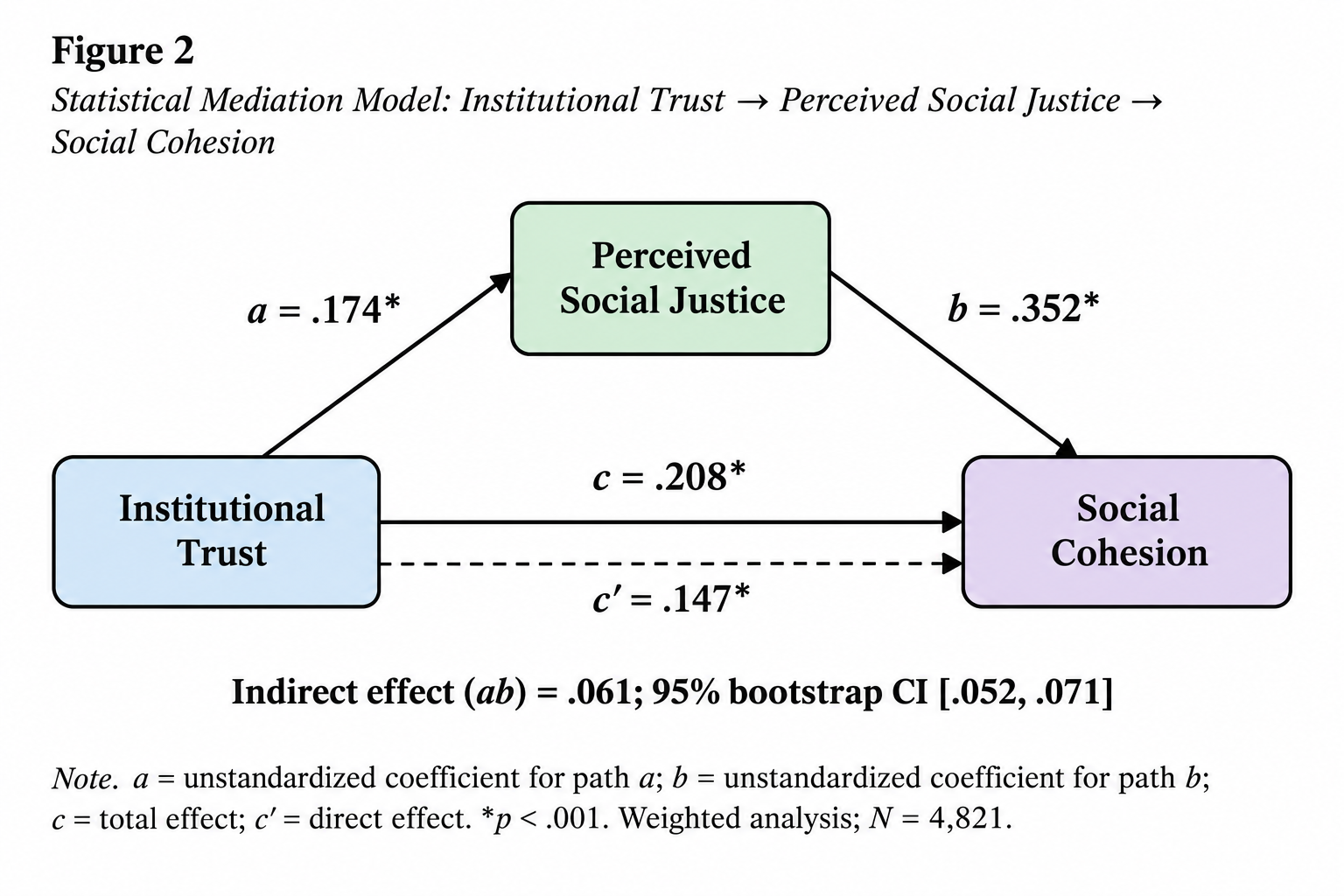
Table 6. Moderation of the Institutional Trust–Social Cohesion Relationship
| Moderator | ΔR² | Joint interaction F-test | p-value | Interpretation |
|---|---|---|---|---|
| Gender | .0001 | F(1, 4787) = 0.527 | .468 | Not significant |
| Age group | .0064 | F(4, 4784) = 9.427 | < .001 | Significant |
| Educational attainment | .0177 | F(4, 4784) = 26.583 | < .001 | Significant |
| Income category | .0111 | F(7, 4781) = 9.402 | < .001 | Significant |
| Religion | .0001 | F(3, 4785) = 0.124 | .946 | Not significant |
| Ethnic group | .0221 | F(3, 4785) = 44.525 | < .001 | Significant |
| Urbanisation | .0012 | F(1, 4787) = 6.826 | .009 | Significant |
| Geopolitical zone | .0240 | F(5, 4783) = 29.069 | < .001 | Significant |
4.8 Discussion of Major Findings
The findings indicate that social cohesion in Nigeria is associated with both citizen–state and citizen–citizen relationships, although these relationships operate differently. Institutional trust was positively associated with social cohesion at the bivariate level (r = .235, p < .001) and in the individual-predictor model (B = .175, β = .230, p < .001). It remained positively associated with social cohesion in the full model (B = .147, β = .192, p < .001). Horizontal trust also showed a positive association at the bivariate and individual-predictor levels (r = .129, p < .001; B = .062, β = .098, p < .001). These findings are consistent with Burchi et al. (2026), who emphasise both horizontal relationships among citizens and vertical relationships with institutions as dimensions of social cohesion. Nigerian evidence similarly links trust, connectedness and community networks with collective action and cohesion (Adetunji et al., 2023; Adeleke et al., 2023). However, the strong correlation between institutional and horizontal trust (r = .688) and the change in the horizontal trust coefficient in the full model suggest considerable overlap between the two dimensions. The negative coefficient for horizontal trust in the full model (B = −.035, β = −.055, p = .003) should therefore be understood as its unique association after other factors are controlled, rather than as evidence that horizontal trust generally weakens social cohesion.
The paired comparison provides statistical support for the descriptive difference between horizontal and institutional trust. Respondents reported higher trust in people from other ethnic and religious groups than in the public institutions and leadership actors assessed by the survey, and the observed 0.269-point gap was statistically significant. This finding provides empirical support for the trust contrast motivating the study’s central argument. It should not, however, be interpreted to mean that every respondent trusts other citizens more than institutions, or that all state institutions are uniformly distrusted. The institutional-trust measure includes both formal public institutions and other public leadership actors, including religious and traditional leaders, the media and other bodies. The result is therefore best understood as an aggregate difference between the two measured trust dimensions.
Perceived social justice emerged as an important dimension of social cohesion. It showed the strongest bivariate association with social cohesion (r = .317, p < .001) and remained a strong predictor in both the individual model (B = .423, β = .294, p < .001) and the full model (B = .352, β = .245, p < .001). This indicates that social cohesion is strongly associated with citizens' perceptions of fairness, equal treatment and access to justice. The finding adds a justice dimension to the multidimensional understanding of social cohesion proposed by Burchi et al. (2026), demonstrating that perceptions of fairness are relevant to how citizens experience and evaluate the wider social system.
The mediation findings further demonstrate the importance of perceived social justice in the relationship between institutional trust and social cohesion. Institutional trust was positively associated with perceived social justice (path a: B = .174, SE = .010, p < .001), while perceived social justice was positively associated with social cohesion after accounting for institutional trust and the other explanatory variables (path b: B = .352, SE = .020, p < .001). The total association between institutional trust and social cohesion was positive and statistically significant (B = .208, SE = .015, p < .001). However, after perceived social justice was included in the model, the direct association remained significant but declined to B = .147 (SE = .015, p < .001). The estimated indirect effect through perceived social justice was B = .061 (bootstrap SE = .005, 95% CI [.052, .071]). Since the confidence interval excludes zero, the indirect association is statistically significant.
These findings indicate partial statistical mediation, suggesting that part of the positive association between institutional trust and social cohesion operates through citizens' perceptions of social justice, while a significant direct association remains. Substantively, citizens expressing greater confidence in public institutions and leadership actors also tend to report more favourable perceptions of fairness and access to justice, which are, in turn, associated with stronger social cohesion. This suggests that institutional confidence is linked to social cohesion partly through citizens' assessments of whether the wider social system treats people fairly. Nevertheless, the remaining direct association indicates that other factors, including institutional responsiveness, legitimacy and accountability, may also contribute to this relationship. Accordingly, the null hypothesis (H05), which proposed that perceived social justice does not significantly mediate the relationship between institutional trust and social cohesion, is rejected. However, given the cross-sectional design, the indirect association should be interpreted as a statistical relationship consistent with the proposed pathway—Institutional Trust → Perceived Social Justice → Social Cohesion—rather than proof of a causal mechanism.
Perceived impunity, in contrast, was consistently negatively associated with social cohesion (r = −.157, p < .001; full model: B = −.064, β = −.077, p < .001). This suggests that perceptions of weak accountability may undermine citizens' confidence in a common and just social system. When people believe that wrongdoing or abuses of power go unpunished, they may become less confident that societal rules apply fairly to everyone. Such perceptions can weaken confidence in the institutions responsible for maintaining justice and accountability. Although Kirsten and Bonga-Bonga (2026) examined corruption rather than impunity, their findings similarly link weak institutional accountability with lower social cohesion. Taken together, the findings suggest that social cohesion depends not only on whether people trust one another, but also on whether they perceive the wider social system as fair and accountable.
The findings further demonstrate that the relationship between institutional trust and social cohesion is not uniform across the Nigerian population. Significant interaction effects were observed across age (ΔR² = .0064, p < .001), education (ΔR² = .0177, p < .001), income (ΔR² = .0111, p < .001), ethnicity (ΔR² = .0221, p < .001), urbanisation (ΔR² = .0012, p = .009) and geopolitical zone (ΔR² = .0240, p < .001), while gender (ΔR² = .0001, p = .468) and religion (ΔR² = .0001, p = .946) did not significantly moderate the relationship. Geopolitical zone and ethnicity produced the largest increases in explained variance, followed by education and income. Although urbanisation was statistically significant, its explanatory contribution was relatively small, indicating limited practical significance. These findings suggest that the relationship between institutional trust and social cohesion varies across socioeconomic and geographical contexts. Consequently, the null hypothesis (H06) is partially rejected: it is rejected for age, education, income, ethnicity, urbanisation and geopolitical zone, but not rejected for gender and religion. However, the interaction results alone do not establish which specific categories experience stronger or weaker relationships; the conditional effects presented in the supplementary table provide further information for interpreting these differences.
Taken together, the findings point to a central feature of social cohesion in Nigeria: community relationships may remain relatively strong even when confidence in public institutions is weak. The higher mean for horizontal trust than institutional trust (2.319 versus 2.051) is consistent with this pattern. Community networks may therefore provide an important source of social resilience, but they cannot fully replace effective and accountable institutions. As Burchi et al. (2026) suggest, social cohesion involves both horizontal and vertical relationships. The present findings therefore suggest that strengthening social cohesion in Nigeria requires not only stronger relationships among citizens but also greater institutional trust, perceived fairness and credible accountability.
Theoretical Implications
The findings extend the application of Social Capital Theory to Nigeria by demonstrating how interpersonal relationships and institutional conditions jointly shape social cohesion. The distinction between bonding, bridging and linking social capital provides a useful lens for interpreting these relationships. Bonding social capital reflects connections within close networks, such as family, religious and community groups; bridging social capital connects individuals across ethnic and religious boundaries; while linking social capital concerns relationships between citizens and institutions or authorities.
First, the findings highlight the coexistence of these dimensions of social capital. The reliance on relatives and communal networks as primary sources of support illustrates the continuing importance of bonding relationships. Similarly, the positive but relatively modest association between horizontal trust and social cohesion (r = .129, p < .001) suggests that intergroup relationships contribute to social connectedness, although the study's indicators capture only a limited dimension of bridging social capital.
Second, the findings reinforce the importance of distinguishing horizontal and vertical trust. Both institutional and horizontal trust were positively associated with social cohesion, although their strong correlation (r = .688) indicates substantial overlap. The change in the horizontal trust coefficient in the full model further demonstrates that interpersonal and institutional trust should not be treated as interchangeable. Institutional trust remained positively associated with social cohesion, highlighting the significance of linking relationships in sustaining confidence in the wider social and political system.
Third, the findings demonstrate that justice and fairness are important to social capital processes. Perceived social justice had the strongest bivariate association with social cohesion (r = .317, p < .001) and remained a strong predictor in the full model. Its significant indirect association in the institutional trust–social cohesion relationship further suggests that perceptions of fairness provide an important pathway through which institutional confidence relates to social cohesion.
Fourth, the negative association between perceived impunity and social cohesion (r = −.157, p < .001) introduces institutional accountability as an important consideration in social capital theory. Where citizens perceive that wrongdoing goes unpunished, confidence in the institutional environment necessary for trust, cooperation and collective action may be weakened.
Finally, the moderation results across age, education, income, ethnicity, urbanisation and geopolitical zone indicate that the relationships between social capital dimensions and social cohesion are context-dependent. Taken together, the findings suggest that social cohesion cannot be adequately understood through interpersonal relationships alone. Rather, it emerges from the interaction of bonding networks, bridging relationships and linking connections, alongside institutional fairness and accountability. This interpretation extends the social capital perspectives of Coleman (1988) and Putnam (2000) by emphasising the importance of institutional trustworthiness alongside interpersonal connectedness. Importantly, bonding, bridging and linking social capital serve as interpretive dimensions in this study rather than directly measured constructs.
Policy/Practical Implications
The findings have implications for government institutions, justice-sector organisations, civil society and community actors.
- Strengthen Institutional Trust: Improve transparency, responsiveness, service delivery, complaint handling and accountability so that citizens can experience institutions as reliable and accessible.
- Improve Access to Justice: Make complaint and redress mechanisms easier to access, reduce barriers to justice and ensure fair and transparent decision-making.
- Address Impunity: Strengthen credible accountability mechanisms and ensure that misconduct and rights violations are investigated and addressed consistently.
- Promote Social Trust: Support community dialogue, youth engagement, civic education and activities that encourage cooperation across ethnic and religious groups. Community trust should complement, not replace, effective institutions.
- Use Context-Sensitive Approaches: Consider differences in age, education, income, ethnicity, urbanisation and geopolitical location when designing programmes to strengthen social cohesion.
- Strengthen Community–Institution Links: Connect community organisations, traditional and religious leaders, civil society and public institutions to improve communication, citizen feedback and accountability.
Limitations of the Study
This study has several limitations. First, its cross-sectional design limits the ability to establish causal relationships among institutional trust, perceived social justice, perceived impunity and social cohesion. Although the regression and mediation analyses identify significant associations, they do not establish causality or temporal relationships.
Second, the study relies on self-reported data collected through a single survey instrument. Responses may have been influenced by social desirability, recall difficulties, personal experiences and prevailing political circumstances. The possibility of common-method bias therefore cannot be entirely excluded.
Third, social cohesion was measured using selected indicators of national identity and social polarisation. Although these capture important aspects of cohesion, they may not fully reflect its wider social, institutional and community dimensions. Similarly, the institutional trust measure covers selected public institutions and leadership actors rather than the Nigerian state as a whole.
Fourth, although the Africa Polling Institute's survey weight was applied, verified primary sampling unit and stratification identifiers were unavailable. Consequently, the analysis does not fully account for the complex survey design, which may affect the estimated standard errors and significance tests.
Fifth, missing responses reduced the sample for the multivariable regression and mediation analyses to 4,821 respondents through listwise deletion. This may have introduced bias if missing responses were systematically related to respondents' characteristics or attitudes.
Finally, although the national survey provides broad coverage, aggregate findings may conceal differences across states, communities and local contexts. The observed demographic and geopolitical variations should therefore be interpreted cautiously.
Despite these limitations, the study provides useful evidence on the relationship between institutional trust, social justice, perceived impunity and social cohesion in Nigeria. Future research should employ longitudinal and mixed-methods approaches, use more comprehensive measures of social cohesion and examine variations across local contexts.
Conclusion
This study examined institutional trust, horizontal trust, perceived social justice, perceived impunity and social cohesion using the 2026 Nigeria Social Cohesion Survey. The findings show that social cohesion is associated with both citizen–institution and citizen–citizen relationships.
This study shows that social cohesion in Nigeria depends on both how citizens relate to one another and how they experience public institutions. Nigerians may maintain strong community relationships even when confidence in formal institutions is weak. However, community trust alone may not be enough to sustain wider social cohesion.
The concludes that fair treatment, access to justice and accountability matter. Citizens are more likely to feel part of a shared social system when they perceive institutions as fair, responsive and accountable. Conversely, perceptions of impunity may weaken confidence in that shared system. These relationships also differ across Nigeria's social and geographical groups.
Overall, the Nigerian reality reflected in these findings is that strong communities can help sustain social cohesion, but they cannot fully compensate for weak institutional confidence. Building stronger social cohesion therefore requires not only encouraging trust among citizens but also improving the fairness, responsiveness and accountability of the institutions that serve them. Future research should examine how these relationships change over time.
Appendix A: Variable Operationalisation and Measurement
| Variable | Dataset indicators | Operational definition | Scoring and interpretation |
|---|---|---|---|
| Social cohesion | Identity1, Identity2, Polarization1–Polarization3 | Shared identity and orientations towards social polarisation | Polarisation items reverse-coded; composite calculated where at least four of five items were valid. Higher scores indicate more favourable social-cohesion orientations. |
| Institutional and public-leadership trust | Trust1–Trust12 | Trust in government institutions, justice and security institutions, media, religious leaders and traditional leaders | Composite of the 12 trust items. Higher scores indicate greater trust. |
| Horizontal trust | Trust13–Trust14 | Trust in people from other ethnic groups and other religious faiths | Composite of the two items. Higher scores indicate greater intergroup trust. |
| Perceived social justice | Soc_Justice1–Soc_Justice2 | Perceptions of equal protection under the law and fair access to civil justice | Items coded in a favourable direction. Higher scores indicate more favourable perceptions of social justice. |
| Perceived impunity | Impunity_Index | API-derived measure of perceived impunity | Original API index retained. Higher scores indicate greater perceived impunity. |
| Gender | Survey gender variable | Respondent’s reported gender category | Categorical control/moderator. |
| Age group | Survey age-group variable | Respondent’s age category | Categorical control/moderator. |
| Education | Survey education variable | Highest reported educational category | Categorical control/moderator. |
| Income | Survey income variable | Reported income category | Categorical control/moderator. |
| Religion | Survey religion variable | Respondent’s reported religious category | Categorical control/moderator. |
| Ethnic group | Survey ethnic-group variable | Respondent’s reported ethnic category | Categorical control/moderator. |
| Urbanisation | Survey residence variable | Urban or rural residence classification | Categorical control/moderator. |
| Geopolitical zone | Survey geopolitical-zone variable | Respondent’s geopolitical zone of residence | Categorical control/moderator. |
Measurement notes. The institutional and public-leadership trust measure includes both formal state institutions and non-state or community leadership actors. Horizontal trust is limited to the two available intergroup trust items and is not a comprehensive measure of bridging social capital. The API-derived Impunity_Index was retained rather than reconstructed from the individual impunity items. The social-cohesion composite represents the available identity and polarisation indicators and should be interpreted within this measurement scope.
Reliability assessment. Cronbach’s alpha was assessed for the multi-item measures using complete cases for the relevant items. The previously calculated estimates were: institutional and public-leadership trust, α = .940; horizontal trust, α = .864; perceived social justice, α = .790; and social cohesion, α = .786. The social-cohesion reliability estimate was based on respondents with complete responses to all five items, whereas the composite score allowed a minimum of four valid responses. The API-derived Impunity_Index was treated as a supplied index and was not assigned a new Cronbach’s alpha in this analysis.
Appendix B Supplementary Table S1. Conditional Effects of Institutional Trust on Social Cohesion Across Demographic and Geopolitical Categories
| Moderator | Dataset category | Conditional slope (B) | SE | 95% CI | p-value |
|---|---|---|---|---|---|
| Gender | 1 | .140 | .018 | [.105, .175] | < .001 |
| Gender | 2 | .154 | .019 | [.118, .191] | < .001 |
| Age group | 1 | .162 | .035 | [.092, .231] | < .001 |
| Age group | 2 | .114 | .022 | [.071, .156] | < .001 |
| Age group | 3 | .107 | .020 | [.068, .146] | < .001 |
| Age group | 4 | .277 | .027 | [.225, .330] | < .001 |
| Age group | 5 | .161 | .041 | [.081, .241] | < .001 |
| Education | 1 | −.104 | .041 | [−.185, −.024] | .011 |
| Education | 2 | −.143 | .045 | [−.230, −.055] | .001 |
| Education | 3 | .252 | .031 | [.191, .313] | < .001 |
| Education | 4 | .166 | .018 | [.130, .201] | < .001 |
| Education | 5 | .202 | .023 | [.157, .246] | < .001 |
| Income | 1 | .055 | .023 | [.010, .100] | .018 |
| Income | 2 | .159 | .023 | [.114, .203] | < .001 |
| Income | 3 | .252 | .025 | [.203, .301] | < .001 |
| Income | 4 | .172 | .032 | [.109, .235] | < .001 |
| Income | 5 | .227 | .051 | [.128, .326] | < .001 |
| Income | 6 | .331 | .074 | [.186, .476] | < .001 |
| Income | 7 | .248 | .078 | [.095, .400] | .001 |
| Income | 8 | .037 | .034 | [−.030, .104] | .274 |
| Religion | 1 | .144 | .018 | [.109, .180] | < .001 |
| Religion | 2 | .149 | .020 | [.110, .187] | < .001 |
| Religion | 3 | .201 | .103 | [−.002, .403] | .052 |
| Religion | 4 | .112 | .156 | [−.194, .418] | .474 |
| Ethnic group | 1 | .329 | .024 | [.282, .375] | < .001 |
| Ethnic group | 2 | −.004 | .022 | [−.048, .039] | .844 |
| Ethnic group | 3 | .119 | .030 | [.059, .178] | < .001 |
| Ethnic group | 4 | .165 | .021 | [.124, .207] | < .001 |
| Urbanisation | 1 | .121 | .018 | [.086, .156] | < .001 |
| Urbanisation | 2 | .174 | .018 | [.138, .209] | < .001 |
| Geopolitical zone | 1 | .056 | .029 | [−.002, .114] | .057 |
| Geopolitical zone | 2 | −.051 | .036 | [−.121, .019] | .152 |
| Geopolitical zone | 3 | .102 | .024 | [.056, .148] | < .001 |
| Geopolitical zone | 4 | .116 | .042 | [.034, .199] | .006 |
| Geopolitical zone | 5 | .170 | .026 | [.120, .221] | < .001 |
| Geopolitical zone | 6 | .359 | .025 | [.311, .407] | < .001 |
Note: Category numbers reproduce the numerical coding in the dataset. The corresponding category labels should be inserted from the survey codebook before publication. Conditional slopes are estimates within each category; their individual p-values do not test whether two categories' slopes differ significantly. The joint interaction tests in Table 6 provide the formal tests of differences. Small category sizes, particularly in some religion and income groups, require cautious interpretation.
Source: Africa Polling Institute (API), 2026 Nigeria Social Cohesion Survey; author's analysis.
Interpretation of the conditional effects
The conditional slopes provide several important observations:
Age: The institutional-trust association is strongest in category 4 (B = .277), compared with categories 2 and 3 (B = .114 and .107 respectively). The overall age interaction is significant.
Education: The association differs substantially across the five coded categories. Categories 1 and 2 have negative conditional estimates, while categories 3–5 have positive estimates. The overall interaction is significant.
Income: The slope is strongest in category 6 (B = .331), although this category has a relatively small sample. Category 8 has a comparatively weak, non-significant slope.
Ethnicity: Category 1 has the strongest positive slope (B = .329), while category 2 has an estimate close to zero. The overall interaction is highly significant.
Urbanisation: Both categories have positive slopes, but category 2 has a stronger estimated association (B = .174) than category 1 (B = .121).
Geopolitical zone: Category 6 has the strongest positive slope (B = .359), while categories 1 and 2 have weaker, statistically non-significant estimates.